

Language and currency settings
Change your language and currency settings by selecting your preferences below
Select currency
Select language
Diamond 4Cs explained: a guide to choosing the right Diamond

Cut, Color, Clarity, and Carat are the four words behind every diamond. Together, they tell you how light dances inside the stone, how pure its color is, how clear it is inside, and how much it weighs. At Nangi, we don't believe knowledge and feeling need to stand in each other's way. The better you know the 4 Cs, the more clearly you'll see exactly what you're choosing, and the more beautiful the moment becomes when you do. Let's get to know them together, one C at a time.
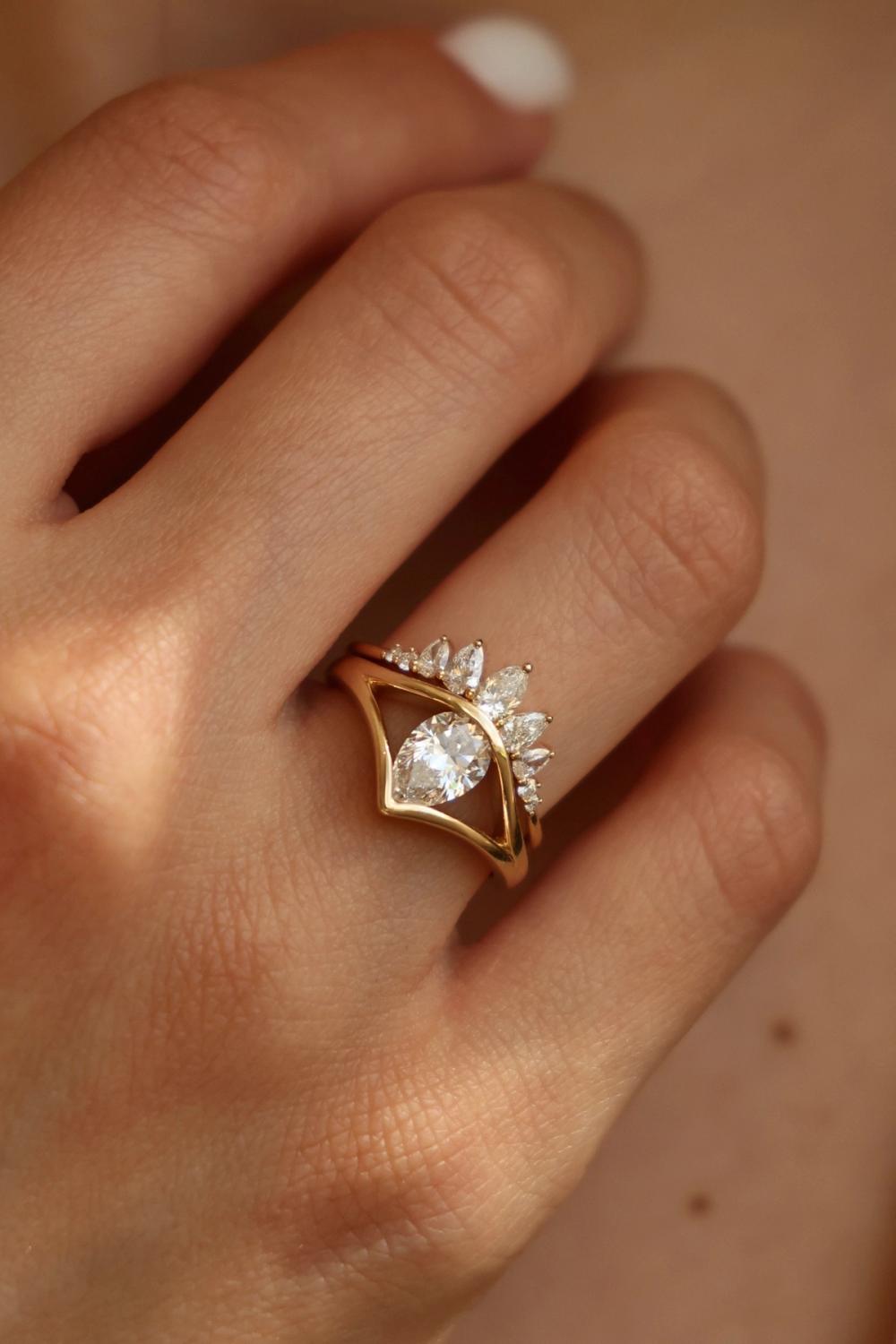
Above: Serendip Swan and Swan Princess set in solid 14k yellow gold
What are the 4 Cs?
The 4 Cs, Cut, Color, Clarity, and Carat, are the international language used to describe a diamond, graded according to standards set by IGI (International Gemological Institute). These standards apply exactly the same way to lab-grown diamonds as they do to a mined natural diamond. A lab-grown diamond is graded by the very same gemologists, on the very same scales, because it is, in every physical and chemical sense, a real diamond. The only difference is where it was grown, and we at Nangi happen to think that difference is a beautiful thing.
Read more about the grading of lab-grown and mined diamonds.
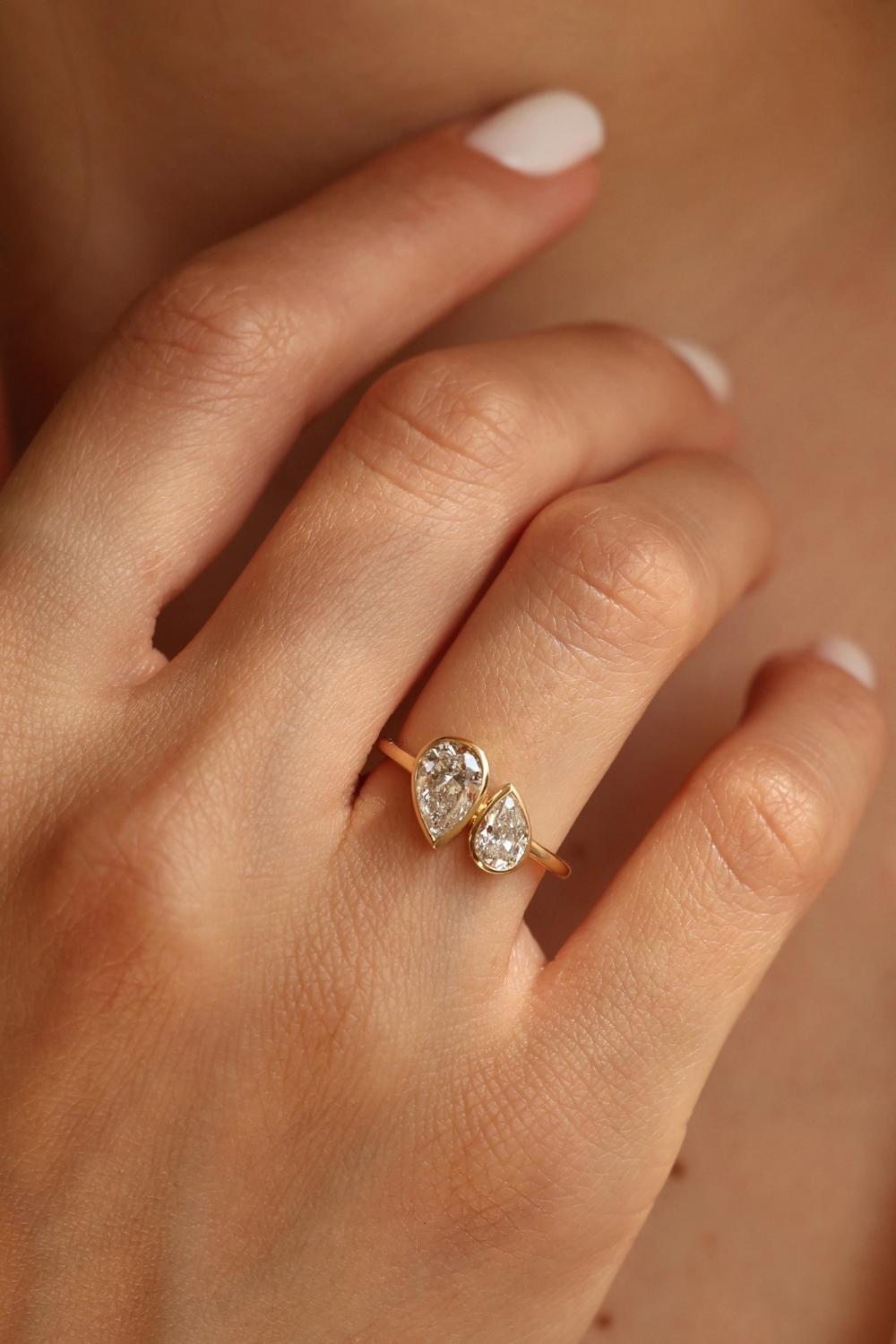
Above: Serendip Toi et Moi set in 14K solid gold
Read more about the beautiful Toi et Moi design
Cut: The most important of the 4Cs
All four of the 4 Cs matter, but if we had to highlight one, cut might just be the most important. Cut describes how precisely a diamond's facets are shaped and angled, and it's easily confused with shape (round, oval, emerald). Shape is the silhouette. Cut is the craftsmanship underneath it.
A beautifully cut diamond captures light and sends it straight back to your eye. A poorly cut one lets light slip out the sides or leak from underneath, leaving the diamond looking flat and dim, even if it's technically a large diamond. This is why a smaller diamond with an exceptional cut will always outshine a bigger one with a mediocre cut.
Three things happen inside a diamond every time light touches it: reflection (the flash that bounces straight back off the surface), refraction (light bouncing between facets before returning to your eye, the source of brilliance), and dispersion (white light splitting into color as it exits, often called the diamond's "fire"). The better the proportions, the more of all three you get, and the more a diamond seems to glow from within.
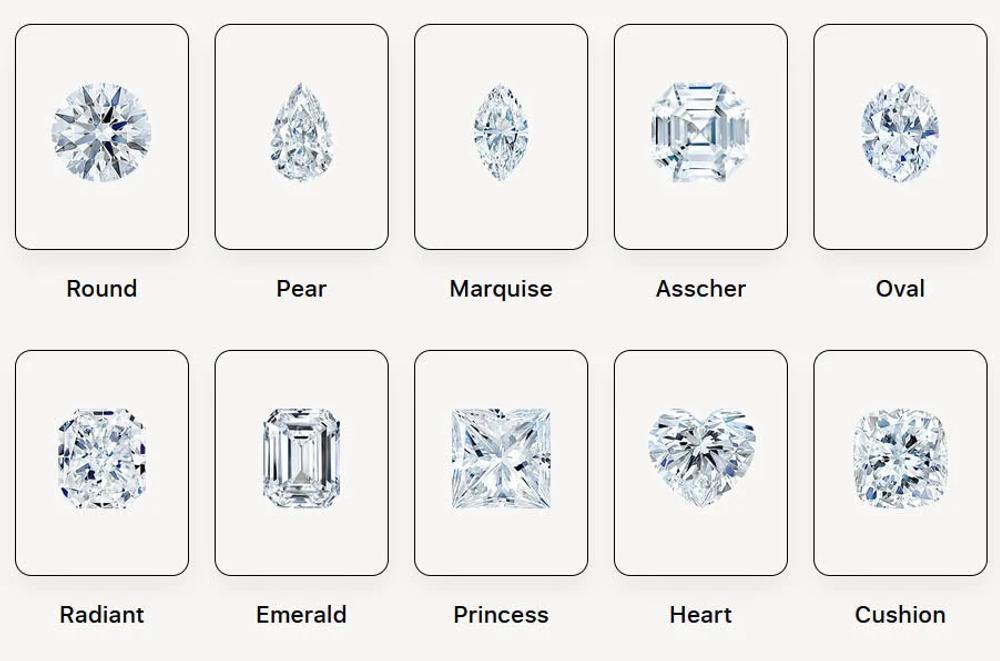
Above: Overview of Diamond Cuts
Learn more: What Do We Mean When We Say We Select the Most Beautifully Cut Diamonds?
Cut grades, from Excellent to Poor
Diamonds are graded on cut from Excellent (sometimes called Ideal) down to Poor. An Excellent cut reflects light almost perfectly and represents only a small fraction of all diamonds cut each year. A Very Good cut is close behind, nearly identical to the naked eye.
Further down the scale, Good, Fair, and Poor cuts lose more light out the sides and base, and often look smaller, darker, and less alive than their carat weight would suggest. If you take only one piece of advice from this guide: it's always worth stretching your cut before you stretch your carat weight.
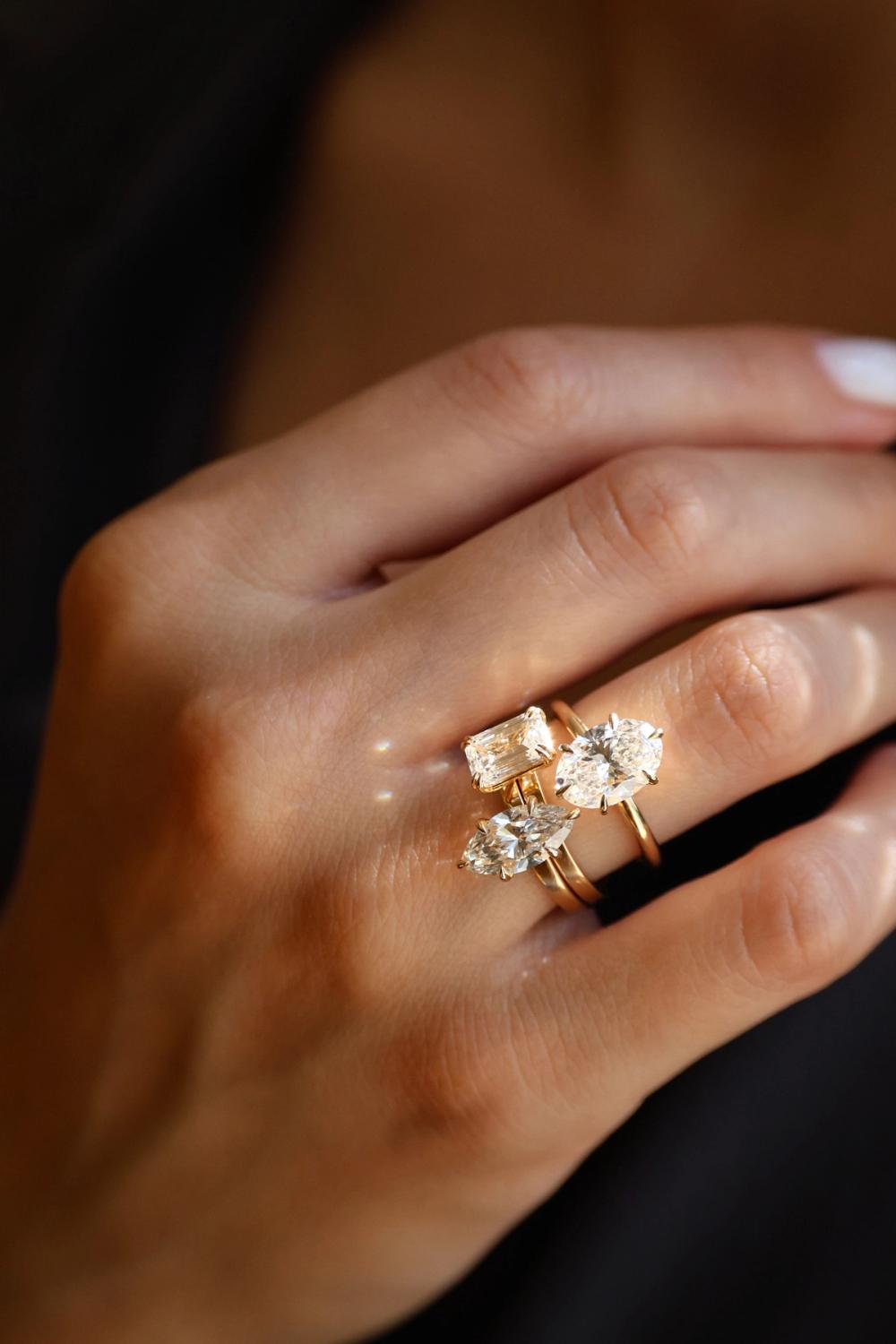
Above: Swan Marquise Compass Diamond Ring 2.00 ct , Swan Emerald Double Prong Diamond Ring 2.00 ct & Swan Oval Compass Diamond Ring 2.00 ct
Color: The beauty of colorlessness
With color, the rule is the opposite of what you might expect: the less color a diamond has, the more valuable it is. The IGI color scale runs from D, completely colorless, to Z, a noticeable yellow or brown tone.
Very few people can tell neighboring grades apart with the naked eye, especially once a diamond is set. The metal around it changes how color reads, too: solid 14K gold in a warmer tone can carry a slightly warmer grade beautifully, while cooler 14K white gold favors a higher grade.
At Nangi, we keep things simple: every diamond we offer falls within the D to E range, the whitest grades on the entire scale, so you never have to wonder if you're compromising.
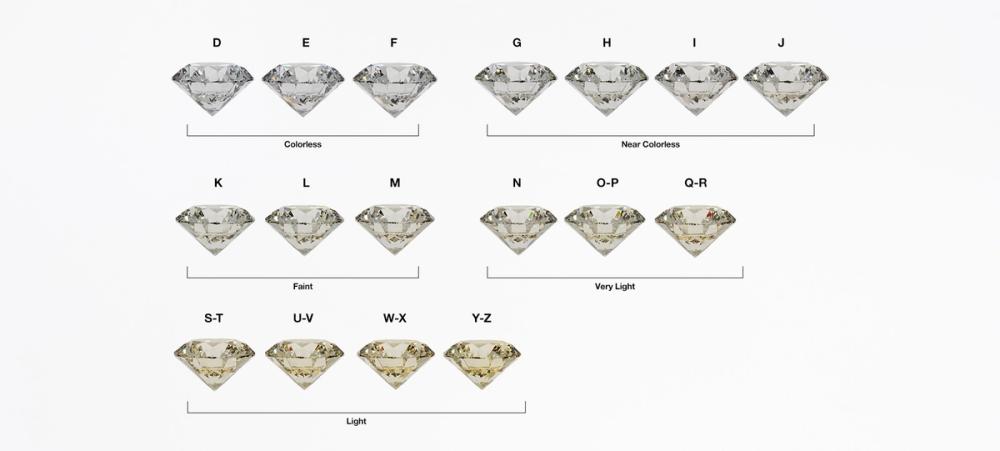
Above: Diamond Color Grading
Read more about the diamond’s place on the Mohs hardness scale
Clarity: Nature's fingerprint
Clarity describes the tiny internal characteristics that form naturally as a diamond grows, whether that growth happened deep within the earth over billions of years, or in a controlled lab environment recreating those same conditions. The IGI scale runs from FL (Flawless) down to I3 (Included), based on the size and position of these characteristics under 10x magnification.
At Nangi, we only offer diamonds graded VVS1 and VVS2, meaning any internal characteristics are so minuscule that even a trained gemologist needs strong magnification to find them. We like to think of it this way: even though your diamond was grown rather than mined, it's still entirely its own — no two diamonds, lab-grown or natural, are ever quite alike.
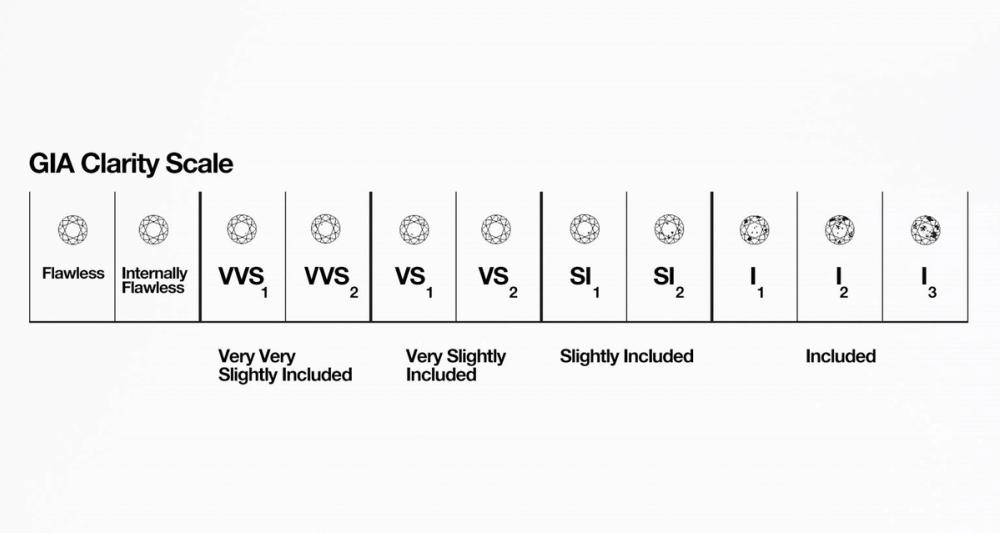
Above: GIA Diamond Clarity Scale
Carat: Weight, not size
Carat is the most commonly misunderstood of the 4 Cs. It measures weight, not size. One carat equals exactly 0.2 grams, a standard adopted internationally in 1907. The word comes from the Greek keration, the carob seed, once used on scales for its wonderfully consistent weight.
Two diamonds of equal carat weight can look quite different in size. A diamond cut too deep hides some of its weight below the girdle, out of sight, while a well-proportioned diamond spreads more generously across the top. Shape matters too, elongated cuts like oval, pear, and marquise tend to look larger than a round diamond of identical weight.
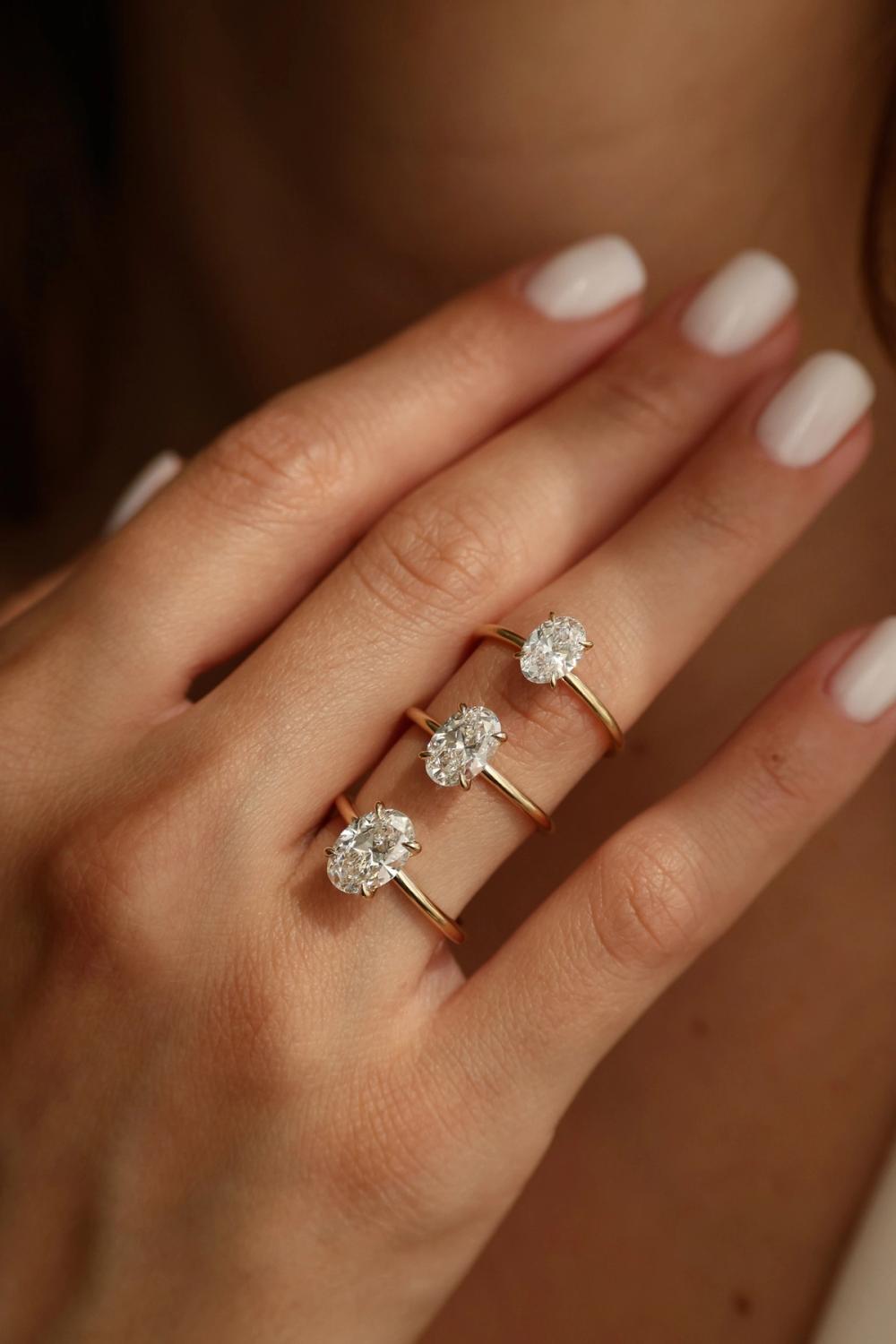
Above: Nangi Owal Swan 2.00 ct · 1.50 ct · 1.00 ct
Why we believe in lab grown
This is where the 4 Cs become more than just a grading system for us, they're part of why we love lab-grown diamonds so much. Because they're grown rather than mined, lab-grown diamonds are associated with a lighter footprint on the planet, which means you can frequently invest more in exactly what matters to you: an exceptional cut, the whitest color, the cleanest clarity, or the carat weight you've always dreamed of, or all of the above.
Five Reasons Why You Should Choose Lab Grown Diamonds.
Read more about colored gemstone grading
A diamond that tells your story
In the end, the 4 Cs aren't a checklist to complete, they're a language for something deeply personal. The right diamond isn't necessarily the one with the highest grade in every category; it's the one that catches the light exactly the way you imagined, sized the way you dreamed, chosen with values you believe in.
That's what matters most to us at Nangi: not just helping you understand a diamond, but helping you choose one that feels entirely yours.
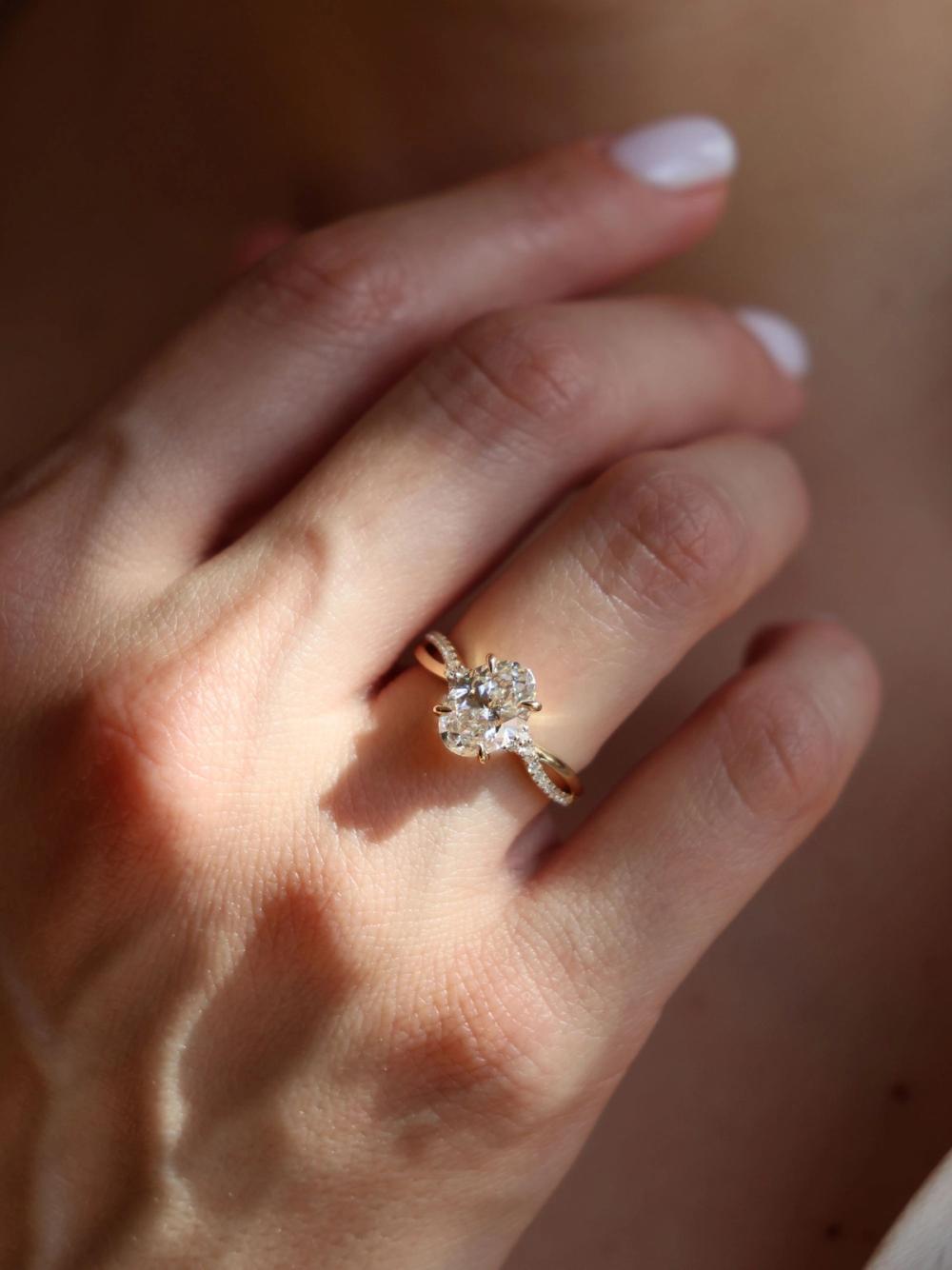
Above: Custom made Twisted Swan Oval Diamond Ring
Explore our diamond collection here.
Words by Sunniva Refsdahl
PR & Sustainability Specialist, Nangi Fine Jewelry
Join the Nangi family!
Read similar posts

Join the Nangi family!
Subscribe to our newsletter to be the first to know when we release new one-of-a-kind pieces, and gain exclusive access to archive sales and events
Visit us
The House of Nangi
Halvdan Svartes Gate 3 | Oslo, Norway
Thursday | 11:00-18:00
Monday - Sunday |
by appointment
Connect
Norsk side
Nangi Fine Jewelry © 2026